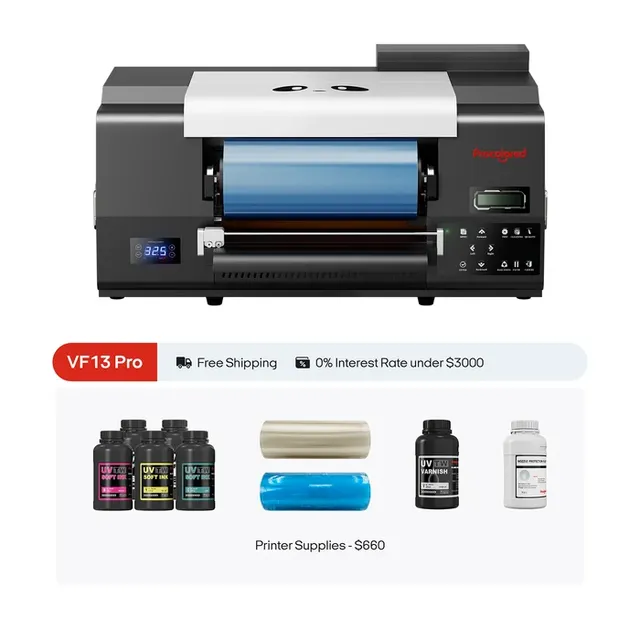
The printing industry is constantly evolving, and modern printing technologies are creating new opportunities for businesses, designers, and entrepreneurs. One of the most innovative developments is the UV DTF printing machine, a versatile solution for producing high-quality designs on a wide range of hard surfaces. From personalized drinkware and promotional products to packaging, glassware, and decorative items, this technology makes it easier to create attractive, durable, and professional-looking prints.
UV DTF printing combines ultraviolet (UV) curing technology with direct-to-film (DTF) transfer methods. Unlike traditional printing techniques that apply ink directly to an object, UV DTF printing creates a design on a special film that can later be transferred to a suitable surface. This approach offers flexibility, detailed graphics, and an efficient way to customize products without printing directly onto each item.
In this article, we will explore how a UV DTF printing machine works, its major benefits, common applications, and important factors to consider before purchasing one.
What Is a UV DTF Printing Machine?
A UV DTF printing machine is a specialized printer that uses UV-curable inks to produce designs on transfer film. The printed design is typically combined with an adhesive layer and transferred onto a compatible object using a film-based application process.
The technology is particularly useful for decorating hard, relatively smooth surfaces such as glass, metal, plastic, ceramic, and coated materials. Depending on the ink system, film, adhesive, and surface preparation, it can create colorful graphics with a glossy, raised, or textured appearance.
A typical UV DTF printing setup includes a printer, UV-curable inks, transfer films, a curing system, and application tools. Some machines feature integrated printing and lamination functions, while others require separate equipment or manual finishing.
Unlike conventional UV flatbed printers, which usually print directly onto an object, a UV DTF printing machine produces a transferable design. This makes it especially useful for businesses that need to decorate objects with different shapes and sizes.
How Does UV DTF Printing Work?
Understanding the printing process helps businesses determine whether this technology suits their production requirements.
1. Design Preparation
The process begins with creating a digital design using graphic design software. The artwork may include logos, text, illustrations, patterns, or full-color images. The design is then prepared using the printer's compatible software and color settings.
2. Printing on Transfer Film
The UV DTF printer prints the artwork onto a specially designed film using UV-curable inks. Depending on the printer configuration, the process may involve CMYK colors, white ink, and additional varnish layers.
White ink helps create opacity on transparent or dark surfaces, while varnish can add gloss or decorative texture when supported by the machine.
3. UV Ink Curing
As the printer deposits ink, ultraviolet light cures it. This process hardens the ink, helping the printed design maintain its shape and detail during handling and transfer.
4. Film Lamination
A compatible adhesive or transfer film is applied according to the system's instructions. In many common setups, the printed film is laminated with a second film to help the design transfer cleanly to the target surface.
5. Application to the Product
The transfer is positioned on a clean, dry surface and pressed or rubbed according to the film manufacturer's instructions. The carrier film is then peeled away, leaving the design attached to the object.
The final result is a customized product with a detailed graphic and a professional finish.
Key Benefits of a UV DTF Printing Machine
Versatile Material Compatibility
One of the biggest advantages of a UV DTF printing machine is its ability to decorate a variety of hard surfaces. Businesses can use the technology for suitable glass bottles, metal tumblers, plastic containers, ceramic items, acrylic products, and promotional merchandise.
However, compatibility depends on the particular material, coating, adhesive, and intended use. Testing samples before full-scale production is recommended.
High-Quality Printing Results
UV DTF printing can produce sharp text, fine lines, colorful graphics, and intricate designs. White ink and varnish options can improve visual impact, especially when creating labels, logos, and premium product decorations.
This makes the technology attractive to businesses that prioritize branding and product presentation.
No Direct Printing on Every Object
Because designs are printed on film before application, the machine does not need to accommodate every product directly during printing. This is useful when decorating curved drinkware, irregularly shaped objects, or products that are difficult to position on a flatbed printer.
Customization and Small-Batch Production
UV DTF printing is well suited to personalized orders and short production runs. Businesses can produce different names, logos, designs, and promotional messages without creating a separate physical printing screen for each design.
This flexibility can help small businesses serve customers who want unique or limited-edition products.
Attractive Finishes
Depending on the printer, ink, and film system, UV DTF transfers can offer glossy finishes, white underlayers, and raised or textured visual effects. These features can make product logos and decorative graphics more noticeable.
Business Expansion Opportunities
A UV DTF printing machine can help an existing printing business expand its services or allow a new entrepreneur to enter the customized-product market. Potential offerings include branded merchandise, personalized gifts, packaging decoration, and corporate promotional products.
Common Applications of UV DTF Printing
The versatility of UV DTF printing makes it suitable for several industries.
- Drinkware customization: Decorating suitable glass bottles, cups, mugs, and tumblers with logos or personalized designs.
- Promotional products: Producing branded merchandise for companies, events, exhibitions, and marketing campaigns.
- Packaging and labeling: Creating decorative graphics for selected jars, containers, boxes, and product packaging.
- Gift products: Personalizing glassware, decorative items, keepsakes, and selected accessories.
- Business branding: Applying logos to suitable equipment housings, containers, display products, and promotional items.
- Craft and DIY projects: Producing custom designs for small businesses, hobbyists, and creative studios.
Before using UV DTF transfers on food-contact products, children's products, or items exposed to high temperatures, verify that the materials and finished application meet the relevant safety requirements.
UV DTF Printing Machine vs. Traditional Printing Methods
Traditional screen printing can be economical for large production runs but may require setup time and additional screens for different designs. Direct UV printing can offer excellent results on compatible objects, although the object must fit the printer's working area and fixture requirements.
UV DTF printing offers a different approach by separating the printing stage from the application stage. This can make product customization easier when businesses work with different object shapes or need to prepare transfers in advance.
Nevertheless, UV DTF is not ideal for every application. Flexible fabrics, heavily textured surfaces, and objects exposed to repeated washing, abrasion, or harsh chemicals may require other printing technologies.
How to Choose the Right UV DTF Printing Machine
Selecting the right machine requires evaluating several important factors.
1. Print width: Choose a working width that matches your typical designs and product requirements.
2. Print quality: Consider resolution, color consistency, white-ink performance, and the machine's ability to reproduce fine details.
3. Ink and film compatibility: Check the availability, cost, and quality of compatible inks, adhesive films, and laminating materials.
4. Production speed: Evaluate realistic production output rather than relying only on advertised maximum speeds.
5. Software and ease of use: Look for compatible design software, clear operating instructions, and accessible technical support.
6. Maintenance requirements: Ask about printhead cleaning, white-ink circulation, routine servicing, replacement parts, and recommended operating procedures.
7. Total operating cost: Include the purchase price, consumables, maintenance, electricity, labor, rejected transfers, and shipping costs when estimating profitability.
A reliable supplier should provide training, technical assistance, warranty information, and sample prints that demonstrate the machine's actual capabilities.
Is a UV DTF Printing Machine a Good Business Investment?
A UV DTF printing machine can be a promising investment for entrepreneurs who identify a clear customer base and manage production costs carefully. Personalized gifts, branded drinkware, promotional merchandise, and small-business branding are potential markets.
Before investing, research local demand, competitors, pricing, and material suppliers. Calculate the cost of each transfer, including ink, film, labor, packaging, and waste. Then compare the total cost with the selling price to estimate the gross profit per order.
Starting with a limited range of popular products can help businesses test demand before expanding their equipment or inventory. Product samples, social media marketing, partnerships with gift shops, and business-to-business sales can also help attract customers.
Remember that profitability depends on sales volume, pricing, quality control, and operating expenses rather than the printer alone.
Conclusion
A UV DTF printing machine offers a flexible way to produce detailed, customized graphics for suitable hard-surface products. Its transfer-based process, attractive finishes, and compatibility with many product shapes make it an appealing option for printing companies, promotional-product suppliers, and personalization businesses.
Choosing the right equipment involves more than comparing machine prices. Print quality, film compatibility, maintenance, technical support, and total operating costs all influence long-term success.
With proper material testing, consistent production practices, and an effective marketing strategy, UV DTF printing can become a valuable addition to a modern customization business. As demand for personalized products and distinctive branding continues to create opportunities, this technology provides businesses with another practical way to turn creative designs into finished products.